
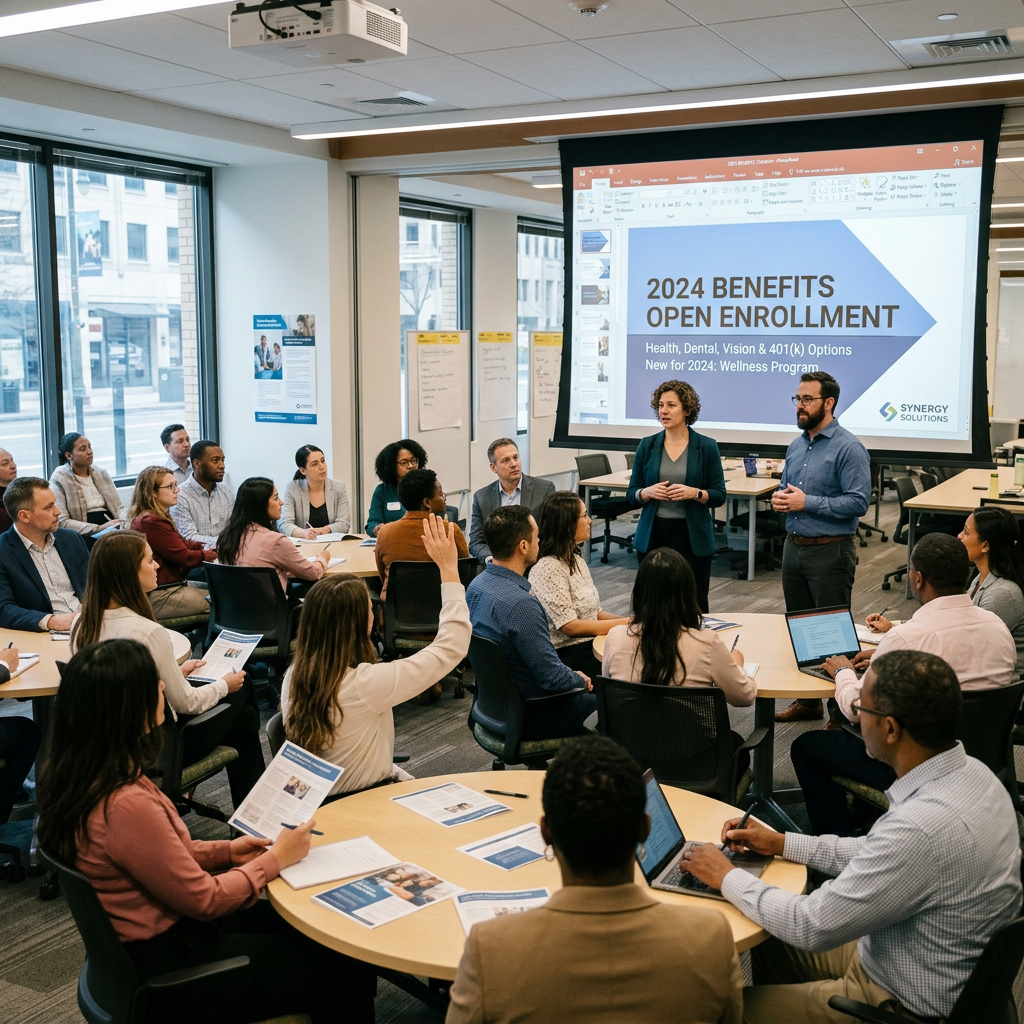
Open enrollment comes around every year, yet many employers still run into the same avoidable issues: missed deadlines, confused employees, payroll errors, and last-minute scrambling that somehow always happens at 4:47 PM on a Friday.
A smoother enrollment season usually comes down to preparation, communication, and process. Here are some of the most common open enrollment mistakes employers still make — and what to do instead.
1. Waiting Too Long to Start Planning
One of the biggest mistakes is treating open enrollment like a one-month project instead of a multi-month process.
By the time renewal rates arrive, employers are often already behind on:
- Reviewing plan options
- Budget planning
- Payroll coordination
- Employee communications
- System updates
How to Avoid It
Start discussions early! (Even if rates haven’t been finalized yet.) Create a timeline that includes:
- Renewal review meetings
- Employee communication dates
- Enrollment deadlines
- Payroll implementation deadlines
- Carrier submission deadlines
The earlier the process starts, the fewer “urgent” problems appear later.
2. Overcomplicating Employee Communication
Many enrollment emails are packed with insurance terminology, attachments nobody opens, and instructions buried six paragraphs deep.
Employees often don’t ignore benefits because they don’t care—they ignore them because the process feels confusing.

How to Avoid It
Keep communication:
- Short
- Clear
- Action-oriented
Instead of: “Please review the attached SBC documentation and complete your elections accordingly.”
Try: “Your benefit enrollment is now open. Please submit your elections by November 15.”
Simple wins.
3. Assuming Employees Understand Their Benefits
Employers sometimes assume employees know the difference between:
- PPO vs. HMO
- Deductible vs. out-of-pocket maximum
- FSA vs. HSA
- Voluntary benefits
- Dependent eligibility rules
Most employees do not spend their free time reading carrier summaries for entertainment.
How to Avoid It
Offer:
- Simple benefit summaries
- FAQ sheets
- Enrollment meetings
- Recorded presentations
- Real-world examples
The easier benefits are to understand, the more confident employees feel making elections.
4. Forgetting About Payroll Coordination
Benefits and payroll are deeply connected, but they’re often handled separately until deductions suddenly don’t match.
This leads to:
- Incorrect deductions
- Missed deductions
- Retroactive adjustments
- Employee frustration
- Extra administrative cleanup
How to Avoid It
Before enrollment goes live:
- Confirm deduction amounts
- Verify payroll frequencies
- Review employer contribution setups
- Test payroll integrations
- Assign ownership for deduction updates
A five-minute review upfront can prevent five weeks of correction emails later.

5. Relying Too Heavily on Manual Processes
Spreadsheets still run a surprising number of enrollment processes. Unfortunately, spreadsheets also:
- Get overwritten
- Miss updates
- Create version confusion
- Increase human error
How to Avoid It
Use centralized systems whenever possible for:
- Enrollment tracking
- Employee elections
- Reporting
- Eligibility management
- Payroll exports
Even small automation improvements can dramatically reduce errors.
6. Ignoring Eligibility Audits
Dependent eligibility issues often stay hidden for years until a carrier audit or billing discrepancy uncovers them.
Common examples include:
- Over-age dependents
- Former spouses remaining enrolled
- Incorrect waiting periods
- Missed terminations
How to Avoid It
Conduct regular eligibility reviews before open enrollment begins. Verify:
- Employee classifications
- Waiting periods
- Dependent eligibility
- Termination processing
- ACA measurement tracking if applicable
Cleaning this up before enrollment prevents larger problems later.
7. Not Preparing for Employee Questions
Every open enrollment season generates questions. Usually the same ones:
- “Did my elections go through?”
- “Why did my paycheck change?”
- “Can I add my spouse?”
- “What’s an HSA?”
- “I accidentally waived coverage. Now what?”
How to Avoid It
Prepare support resources ahead of time:
- FAQs
- Contact points
- Office hours
- Step-by-step instructions
- Confirmation reminders
Employees are far less stressed when they know where to go for help.
8. Treating Open Enrollment as Only an HR Project
Successful enrollment requires coordination across:
- HR
- Payroll
- Finance
- Leadership
- Brokers
- Carriers
- Technology teams
When departments operate separately, important details fall through the cracks.
How to Avoid It
Assign clear responsibilities early and schedule regular check-ins throughout the process. A collaborative approach prevents last-minute surprises.
Final Thoughts
Open enrollment does not have to feel chaotic every year. Most enrollment problems are preventable with earlier planning, clearer communication, and better coordination between teams.
The goal is not just completing enrollment, it’s creating a process employees can actually understand and trust.
Because nothing says “benefits season” quite like discovering a deduction issue after payroll has already processed. Twice.

📞 Wondering how you can simplify Open Enrollment? Contact us today.
Sources
- Society for Human Resource Management. “Open Enrollment Guide & Resources.” SHRM, 28 June 2024, https://www.shrm.org/mena/topics-tools/news/benefits-compensation/open-enrollment-guide-resources. Accessed 27 May 2026.
- Society for Human Resource Management. “Last-Minute Tips for Open Enrollment Communications.” SHRM, 8 Nov. 2021, https://www.shrm.org/topics-tools/news/benefits-compensation/last-minute-tips-open-enrollment-communications. Accessed 27 May 2026.

Leave a Reply